







Seu próximo nível começa aqui
Seu desenvolvimento não pode ter limites. Garanta sua Assinatura Ilimitada e libere uma preparação completa com os melhores professores do Brasil.

Código I – para os itens de 51 a 63
01 public class Estrutura {
02___private class No {
03_____int valor: int qtd; No filhoE, filhoD;
04_____No(int valor) {this.valor = valor; qtd = 1;}
05_____No insere(int valor) {
06_______if (this.valor > valor) {
07_________if (filhoE == null) ( filhoE = new NHo(valor); return filhoE;
08__________} else ( return filhoE.insere(valor);
09__________}
10________} else if (this.valor < valor) {
11__________if (filhoD == null) ( filhoD = new Ho(valor); return filhoD;
12__________} else { return filhoD.insere(valor);
13_________}
14________} else {
15__________qtd++; return this;
16________}
17_____}
18_____void atravessa() {
19________if (filhoD != null) filhoD.atravessa();
20________System.out.print("("+valor+","+gtd+")");
21________if (filhoE != null) filhoE.atravessa();
22_____}
23___}
24___String nome; No raiz;
25___Estrutura(String nome) (this.nome = nome;raiz = null;)
26___No insere(int valor) {
27_____if (raiz == null) (raiz = new No(valor) ;return raiz;
28_____} else return raiz.insere(valor);
29___}
30___void atravessa() {
31_____if (raiz == null) return;
32_____System.out .print(nome+"={") ;raiz.atravessa() ;System.out.print("}");
33___}
34___public static void main(String[] args) {
35_____Estrutura e = new Estrutura(args[0]);
36_____for (int i = 1; i < args.length; i++) {
37_______e.insere(Integer.parseInt(args[i]));
38_____}
39_____e.atravessa();
40___}
41 }
Código II – para os itens de 60 a 63
01 import java.avt.*;
02 import java.avt.event.*;
03 import javax.swing.*;
04 public class Editor implements ActionListener {
05 ___JFrame frame = new JFrame("Editor de Estrutura");
06 ___JPanel painelTopo = new JPanel();
07 ___JLabel labelvalor = new JLabel(*Valor");
08 ___JTextField textFieldValor = new JTextField("");
09 ___JButton hotaoInsere = new JButton("Insere");
10 ___JButton hotaoAtravessa = new JButton("Atravessa");
11 __JTextArea saída = new JTextArea("");
12 ___Estrutura estrutura = nev Estrutura("Editor");
13 ___Editor() {
14 _____frame. setLayout (new BorderLayout());
15 _____painelTopo.setLayout(new GridLayout(2, 2));
16 _____frame. add(painelTopo, BorderLayout.NORTH) ;
17 _____frame.add(saíida, BorderLayout.CENTER);
18 _____painelTopo.add(labelValor);
19 _____painelTopo.add(textFieldValor);
20 _____painelTopo.add(botaoInsere) ;
21 _____painelTopo. add(hotaoAtravessa) ;
22 _____hotaoInsere.addActionListener(this):
23 _____hotaoAtravessa. addActionListener(this);
24 _____frame.pack() ; frame.setVisible(true);
25 ___}
26 ___public void actionPerformed(ActionEvent argo) {
27 _____if (argo.getSource() == hbotaoInsere) {
28 _______estrutura. insere(Integer .parseInt(textFieldValor.getText())):
29 ___} else {
30 _____saida.setText (estrutura.atravessa()) ;
31 ___}
32 _}
33 _public static void main(String[] args) {
34 ___new Editor();
35 _}
36 }
O programa Java representado pelo código II acima implementa uma interface gráfica com o usuário, e utiliza as funções providas pela classe Estrutura, apresentadas no código I. Considere que, a partir da execução do programa acima, seguida da interação com o usuário, tenha sido produzido como resultado a interface gráfica apresentada na figura abaixo.
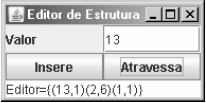
A partir da análise do programa acima e da saída de dados por ele produzida, julgue os itens que se seguem.
Para produzir a interface gráfica ilustrada acima, a linha 30 do código II foi executada pelo menos uma vez, sem produzir erros ou exceções, mas não há como determinar, com as informações apresentadas, se o botão  foi acionado mais de uma vez.