







Seu próximo nível começa aqui
Seu desenvolvimento não pode ter limites. Garanta sua Assinatura Ilimitada e libere uma preparação completa com os melhores professores do Brasil.

Involve local groups in protecting biodiversity, conservationists urge
Edinburgh declaration calls on leaders to work far more closely with communities
Severin Carrell Scotland editor
@severincarrell
Mon 31 Aug 2020 12.51 BST
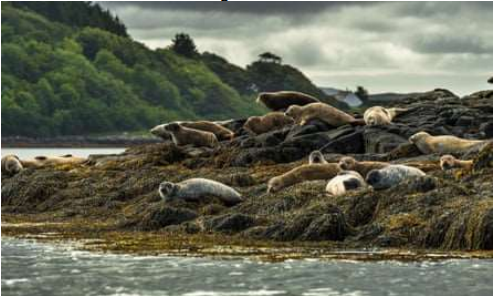
Seals on the Isle of Skye in Scotland. Photograph: Getty Images/iStockphoto
1 The worldwide effort to combat critical levels of biodiversity loss will fail without far
2 greater involvement from local communities, according to an international declaration.
3 The “Edinburgh declaration”, published on Monday, urges leaders to work more closely
4 with sub-national governments, indigenous peoples, national parks, local councils and
5 wider society in meeting 20 biodiversity goals set out in the Aichi accord, signed in
6 Nagoya, Japan, 10 years ago.
7 Those targets were due to have been met by 2020. None of them were, leaving global
8 biodiversity in a parlous state, the statement says.
9 “The current approach is bust,” said Prof Des Thompson, principal science adviser at
10 NatureScot, Scotland’s conservation agency, which contributed to the declaration process
11 run by the Scottish government. “What we need to do is work with local communities,
12 local governments and local communities – that’s how we’re going to meet those targets.”
13 Published by the Scottish government after a series of online conferences, the declaration
14 has been signed by a core group of local politicians and conservation bodies from
15 Scotland, Wales, Quebec, Germany, Sweden, the Basque country in Spain, and Japan.
16 The document was drafted for the latest round of talks on the Convention of Biological
17 Diversity, which had been due to take place this autumn in China but was postponed
18 because of the coronavirus pandemic. It has been rescheduled for next year.
19 The Aichi biodiversity goals for 2020 included removing all incentives or subsidies
20 harmful to nature; halving the rate of loss of all habitats, including forests; managing all
21 fish stocks and aquatic plants sustainably; cutting pollution, including from farming, to
22 sustainable levels; preventing extinctions; and properly funding all the conservation
23 projects needed to meet the 20 goals.
24 The Edinburgh declaration, which will now be opened to signatories worldwide, says its
25 supporters are “deeply concerned about the significant implications that the loss of
26 biodiversity and climate change has on our livelihood and communities. The impacts on
27 our environment, infrastructure, economy, health and wellbeing, and our enjoyment of
28 nature are already visible. Indeed, the Covid-19 global pandemic has reminded us how
29 important it is to live in harmony with nature.”
30 The convention on biological diversity was first opened for signature at the Earth summit
31 in Rio de Janeiro, Brazil, in 1992. Successive multilateral global conferences have made
32 modest progress in upholding the convention’s objectives.
33 Thompson said Scotland was set to meet nine of the Aichi goals.
34 These are chiefly focused on scientific, policy-making and political capacity, but the UK is
35 not yet meeting the targets around adequate funding on biodiversity or phasing out
36 harmful subsidies and biodiversity loss.
Available at: <https://www.theguardian.com/environment/2020/aug/31/involve-local-groups-in-protecting-biodiversity-conservationists-urge>. Access on: 31st, Aug. 2020.
The following extract will be used to answer questions: 30 and 31.
The document was drafted for the latest round of talks on the Convention of Biological Diversity, which had been due to take place this autumn in China but was postponed because of the coronavirus pandemic. It has been rescheduled for next year. (lines 17, 18, 19)
The extract has four (4) underlined elements, analyze them carefully and choose the alternative that best describe them: