







Seu próximo nível começa aqui
Seu desenvolvimento não pode ter limites. Garanta sua Assinatura Ilimitada e libere uma preparação completa com os melhores professores do Brasil.

Read the text below to answer questions 39 to 42.
“To read these books, in this way, as an exercise in self-knowledge, carries certain risks. Risks that are both personal and political. Risks that every student of Political Philosophy has known. These risks spring from the fact that philosophy teaches us, and unsettles us, by confronting us with what we already know. There is an irony: the difficulty of this course consists in the fact that it teaches what you already know. It works by taking what we know from familiar unquestioned settings, and making it strange. [...] Philosophy estranges us from the familiar, not by supplying new information, but by inviting and provoking a new way of seeing.
But, and here is the risk, once the familiar turns strange, it is never quite the same again. Self-knowledge is like lost innocence; however unsettling you find it, it can never be ’unthought’ or ’unknown’. What makes this enterprise difficult, but also riveting, is that Moral and Political Philosophy is a story, and you don’t know where the story would lead, but you do know that the story is about You.”
Text taken from: “Justice: What's the Right Thing to Do?” Introduction Class ― Michael Sandel
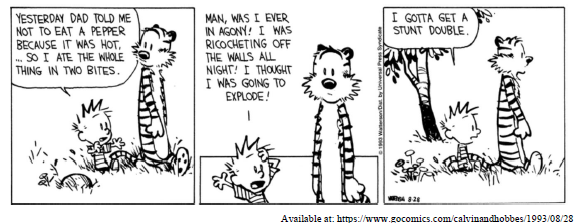
The expression "stunt double" in the last panel of the comic strip refers to: