







Seu próximo nível começa aqui
Com a Assinatura Ilimitada, você tem tudo que precisa para sua aprovação.
Com a Assinatura Ilimitada, você combina prática, teoria e método em uma única assinatura com tudo que você precisa para sua aprovação.
Patricia is a doctor. She _________ science all her life.
studied.
ever studied.
has studied.
has been studied.
Read the passage below and choose the option that is according to the English Grammar.
“A good twenty-first-century educator _______ one who is cognizant of the rapidly changing technology trends and is able to apply those trends to the educational setting in a manner that will ensure students _______ not left behind in the wake of progress and have the necessary skills to compete in the global world.”
have been - are.
are - are.
is - are.
will be - has been.
Consider the sentence below.
"She doesn't know whether X or not".
Complete according to the verb tense and choose the alternative that correctly replaces the X in the sentence above.
To go.
Is going to.
Will goes.
Going.
In the sentence “This service offers online consultations with licensed veterinarians” (lines 35 and 36), the verb “offers” agrees with “consultations”.
Certo
Errado
I _________ this type of fruit salad for the last 4 years.
had ate.
eaten.
have been eating.
will eating.
I __________ here __________ 20 years.
live – for.
lived – by.
am living – during.
have lived – for.
We are brothers, ____________?
are we.
aren’t we.
we are not.
we aren’t.
You have a friend who is learning French. You ask her: “How long ___________ French?”.
have you learned.
have you been learning.
did you learn.
have you learning.
Concerning verb tenses, choose which one of the following sentences is correct.
We live in Brasília since we were married 10 years ago.
As the little boy was crossing the street, a car was hitting him.
She had just started taking a shower when the phone was ringing.
Sorry, he’s not here. He has just left the office.
If you are waiting here just a minute, I fetch you a cup of coffee.
Com relação a verbos, modos e vozes da língua inglesa, julgue os itens que se seguem.
I A voz passiva da oração “I have finished the school project in 2021” é “The school project has been finished in 2021”.
II O modo imperativo em língua inglesa é composto pela forma-base do verbo, como em “To do it!”.
III Em “I had already done the exercises when the teacher arrived”, o tempo verbal da oração “I had already done the exercises” é o past perfect.
Assinale a alternativa correta.
Apenas os itens I e II estão certos.
Apenas os itens I e III estão certos.
Apenas os itens II e III estão certos.
Todos os itens estão certos.
In the cartoon, the word “taught” is
a noun.
a modal verb.
in the present perfect tense.
the past of the verb to teach.
the past participle of the verb talk.
Match the columns to the correct verb tenses and choose the alternative with the correct sequence.
1 – Past Simple
2 – Present Perfect
3 – Present Simple
4 – Present Continuous
( ) I still live in the family home.
( ) All my life, I’ve been around cars.
( ) I’m having my own house built at the moment.
( ) I sold my first car - a Porsche convertible - at the age of 11.
2 - 3 - 1 - 4
3 - 2 - 4 - 1
4 - 1 - 2 - 3
1 - 4 - 3 - 2
In the second paragraph, when the authors argue that “Critical scholars have overtly supported the idea”, they mean that the idea has been
explained.
tolerated.
opposed.
endured.
backed.
Check the alternative which contains only irregular verbs:
flew - listen - walk
become - listen - win
hit - put - - teach
split - reflect - study
listen - play - study
The verb “removed” (third sentence) can be adequately replaced with taken out.
Certo
Errado
In line 11, “has been” is an example of the Present Perfect tense, which is formed by the Present Simple form of the verb to have and the Present Perfect form of the main verb.
Certo
Errado
Read the cartoon and, without changing the meaning, choose the alternative that substitutes the modal verb CAN in “We can do something about the future”.
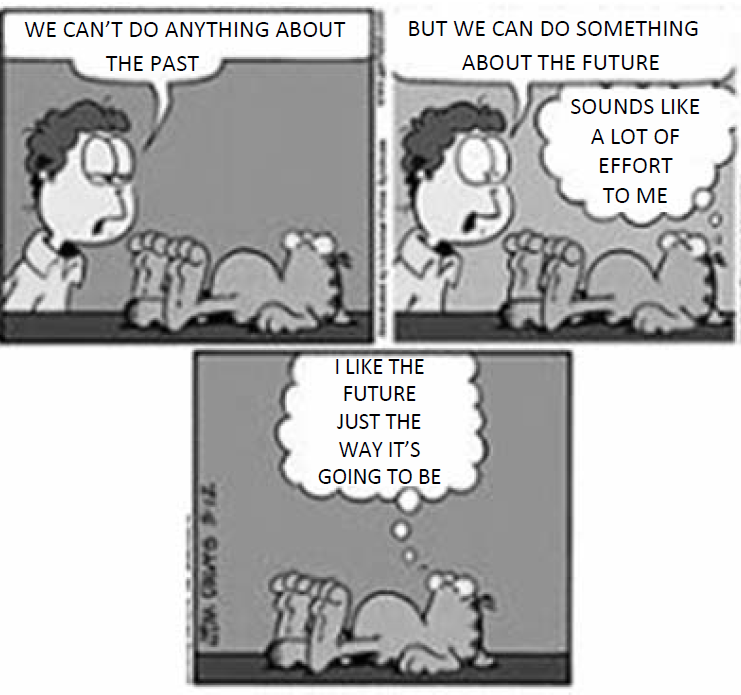
---------------------------http://quadrinhostraduzidos.blogspot.com/2016/10/passado-presente-e-futuro-garfield.html
Is able to.
Are able to.
Is capable to.
Are allowed to.
What´s the tense of the verb in bold in the sentence below?
"You know that our tasks in the company are quite varied ."
Past Participle.
Infinitive.
Present Tense.
Past Tense.
Considering the verb tense, mark the alternative that fills the text gap CORRECTLY:
whatch
whached
whatches
whatching
The ed added at the end of verbs can be a trick subject when it comes to proper pronunciation. In that respect, the rationale which stands for the selection of words to form the sequence that follows is:
-
Concealed – Used – Bathed – Echoed – Robbed – Claimed – Bragged
Ed is pronounced /
After vowels and unvoiced consonants, ed is pronounced /
The ed is pronounced /
Special words ending in ed are pronounced /



