







Seu próximo nível começa aqui
Seu desenvolvimento não pode ter limites. Garanta sua Assinatura Ilimitada e libere uma preparação completa com os melhores professores do Brasil.

LIFE LESSONS I LEARNED FROM BEING A NOMAD FOR TEN YEARS
Matt Kepnes traveled constantly for a decade – never hanging his hat in one place – learning some valuable lessons along the way.
by Matt Kepnes on 7/10/19 at 11:14 AM edt
Ten years a nomad. Over the course of 3,000 nights on the road, I slept in thousands of hostels, visited close to 100
countries, and interacted with more human beings than I can keep track of.
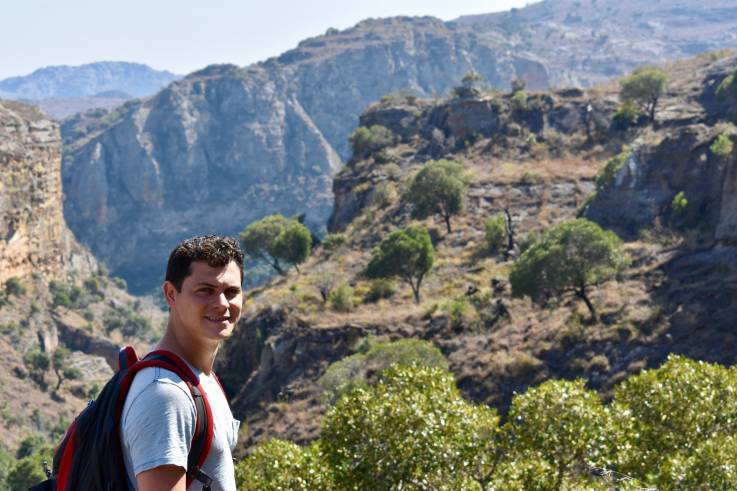
Matt Kepnes traveled the world constantly for 10 years. Here he is in Africa.
And, throughout those years of being a nomad, I learned a lot about our world — and my place in it. Not everyone is
going to become a nomad. Not everyone wants to spend a decade on the road. Heck, most people don’t want to
5spend more than a few weeks on the road. But, in those years of peripatetic traveling, there were lessons I learned
that could apply to anyone. They are insights into the world that only travel – no matter how long you do it – can give
you.
People are essentially the same.
Travel taught me a lot about our shared humanity. Interacting with people, watching them commute, pick up laundry,
10go grocery shopping, and do all the other everyday things I did back home, allowed me to understand that,
fundamentally, we all just want the same things: to be happy, to be safe and secure, to have friends and family who
love us. We may speak different languages and do things differently, but the why of what we do is universal.
Always expect the unexpected.
[…] Problems — big and small — will arise when you travel. So always bring a first aid kit and get travel insurance.
15You never know when a bandage or some antibacterial ointment will come in handy. And you never know when you'll
need help covering the bigger bills or getting home.
Expect the best — but plan for the worst. And, in doing so, you learn to go with the flow because you know that, while
things may be going wrong now, it will all work out in the end. There’s always another bus.
Travel helps you understand on an emotional level what you know intellectually to be true.
20It’s one thing to know that poverty exists in the world. It’s another to see it firsthand. It’s one thing to know that people
are the same. It’s another thing to interact with them and really understand that. While we can “get” things on an
intellectual level, no book, newspaper, or documentary will help you fully understand something. To do that, you need
to experience it firsthand. Until you’ve been to a place — smelled it, looked at it, interacted with it — you’ll never
understand it on a deeper, emotional level.
25People are helpful.
We grow up in a culture of fear where we’re taught to be wary of strangers. I was. But the world is not actually filled
with dangerous strangers lurking around every corner.
It wasn’t until I met some locals at a poker table in Amsterdam who then invited me out that I begin to let my guard
down and realize people are generally good and helpful and want you to see the best in their country and its people. If
30you just give them a chance to help, they will.
Plans are great — but don’t be married to them.
I love planning a trip. Even after all these years on the road, I still plan my trips. Planning gives you ownership of your
travels. It allows you to imagine yourself in far-off lands doing cool things. But don’t be married to your plans as things
will go wrong (see above) and you need to be flexible. Also, being married to your plans doesn’t allow for the
35serendipity that travel gives you. It doesn’t allow you to wander into that cute café, linger in the park, or explore that
random museum you happened across. Just plan two or three things to see or do during the day and let the rest fill
itself in. When you go with the flow and let the day lead the way, you get the magic of travel.
Travel is cheaper than you think.
We are taught that travel is an expensive escape that can only be done a couple of times a year — but that’s not true.
40Think of all your bills. How much do you spend a month when you add it all up? Once I started traveling, I realized
how much cheaper travel was than I was taught. I mean, imagine if you spent only 18K a year on everything! For
most of us that would be huge savings. And it’s never been a cheaper time to travel, thanks to all the cost-saving
information and travel deals out there. […]
It’s never too late to change.
45Even if you aren’t the person you want to be in your head, it’s never too late to change. Travel is all about change.
Traveling has shown me aspects of my personality I wish I didn’t have, like: I’m really lazy. I’ve always sworn by the
phrase “carpe diem”, but sometimes I don’t actually do it. It’s never too late to change, though, and realizing that has
made being more proactive a lot easier.
Travel has shown me a lot about the world and myself and over the decade I’ve been a nomad. I was scared to travel
50the world alone. I was worried I might not have the skills to survive on my own. But while there was a bit of a learning
curve, I came to realize that the well-trodden travel trail out there, and, combined with the goodness of people, found
the skills and confidence to travel as a nomad for a decade.
And if I could make it around the world, you can too!
Source: <https://www.newsweek.com/9-life-lessons-matt-kepnes-learned-being-nomad-ten-years-1448511>. Access on: July 28th. 2019. Adapted.
Which sentence has a passive voice?