







Seu próximo nível começa aqui
Com a Assinatura Ilimitada, você tem tudo que precisa para sua aprovação.
Com a Assinatura Ilimitada, você combina prática, teoria e método em uma única assinatura com tudo que você precisa para sua aprovação.
What Is Community Service?
Community service is work _____________ by a person or group of people that benefits others. You do not get paid to perform community service, but volunteer your time. [...]
Disponível em: <https://blog.prepscholar.com/129-examples-of-community-service-projects>.
Acesso em: 21 mar. 2020. (Adaptado).
Assinale a alternativa que preenche corretamente a lacuna:
o verbo do no present perfect continuous.
o verbo do no present perfect.
o verbo do no past participle.
o verbo do no simple past.
o verbo do no infinitive.
I. ‘We _________ married.’
II. ‘She _________ married to that guy for 2 years, but they divorced a couple of years ago.’
III. ‘We _________ married last year.’
IV. ‘We _________ married for nearly 1 year now.’
have been – has been – were – are.
are – had been – have got – are.
been – got – have been – have been.
are – was – got – have been.
‘You ___________ the bus if you ____________ ready to leave home in 5 minutes!’
will miss – aren’t.
are goint to miss – don’t be.
will have missed – won’t be.
will miss – won’t be.
Os verbos a seguir foram todos retirados do texto. Dentre eles, é verbo regular:
fear (paragraph 1).
feed (paragraph 2)
deal (paragraph 2).
find (paragraph 2).
meet (paragraph 3).
Read the following excerpt from the book The Great Gatsby and complete with the missing verbs.
“By seven o’clock the orchestra _______________, no thin five-piece affair, but a whole pitful of oboes and trombones and saxophones and viols and cornets and piccolos, and low and high drums. The last swimmers ______________ in from the beach now and _______________ up-stairs; the cars from New York _______________ five deep in the drive […]” (FITZGERALD, 2011, p. 32-33).
Source: https://www.wsfcs.k12.nc.us/cms/lib/NC01001395/Centricity/Domain/7935/Gatsby_PDF_FullText.pdf Access on March, 20th 2023
arrived - came - are dressing - parked.
has arrived - have come - are dressing - are parked.
will arrive – are coming – were dressing – will be parked.
arrived – had come – will dress – park.
are arriving – will come – dress – are not parked.
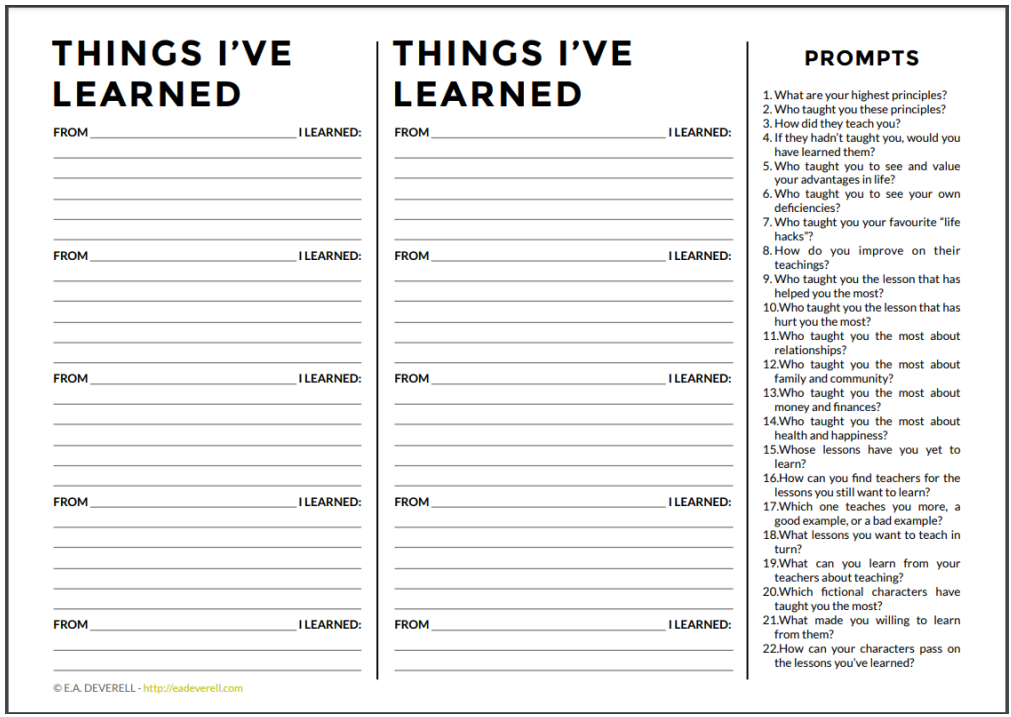
Read the text below and answer the question:
What have you learned today?
Source: https://www.eadeverell.com/things-learned/ Access on March, 20th 2023
The verb tense in the question “What have you learned today?” was used to talk about:
an action which the period of time is still going on.
something that happened in a definite time in the past.
an action when the time does not carry much importance.
an event that happened sometime during a person's life.
something you are going to learn today.
In the period “he was referring to” (line 23) the verb is in the past progressive tense and “was” is the singular form of the past of the verb to be.
Certo
Errado
“I have often thought1 what a melancholy world this would be without children, and what an inhuman world without the aged.” (Samuel Taylor Coleridge)
“She had had2 to change her limbs. She had had to get limbs that ordinary people have and walk, but every step she took, agonizing pain! This is what she was willing3 to go through, to get the prince. So, I thought she deserved more than death on the water.” (Alice Munro)
In terms of verb tenses, the verb forms in bold in these sentences are, respectively, in the
past perfect1, present perfect2, and present continuous3.
present perfect1, past perfect2, and past continuous3.
past perfect continuous1, past perfect2, and past continuous3.
present perfect1, simple past2, and future continuous3.
The option in which the group of verbs are not usually used in the progressive tenses is:
hear, feel, forget
prefer, dislike, hate
say, lose, hear
know, lave, live
She __________ never _________ a car before.
have - drove
has - drived
has - driven
have - droven
Choose the best option that fills in the blank:
“If global conditions _____ fraught, they ____ Goldilocks was a fairy tale after all.”
Turns – will prove.
Turn – could prove.
Turn – will prove.
Turns – have proved.
Turned – proved.
Study these sentences and decide if they are ( T ) true or ( F ) false.
( ) The phrasal verb look up to (paragraph 3) means admire.
( ) The expression along the way (paragraph 5) means during the process.
( ) In the sentence “They often grow to realize that they love making music…” (paragraph 5), realize means misunderstand.
( ) In the sentence “El Sistema is the inspiration behind Britain’s In Harmony scheme.”, the (s in Britain’s) indicates possession.
( ) The infinitive forms of the verbs stood, begun and gone are stand, began and go.
Choose the alternative which presents the correct sequence, from top to bottom.
T • T • F • T • F
T • F • T • F • T
F • T • F • T • F
F • T • F • F • F
F • F • T • F • T
Concerning the use of the present continuous, mark the CORRECT alternative:
He is ___________ a very good juice.
drinking
drink
drunk
has drink
The teacher told the coordinator that students ___________________ the entire summer texting. She explained that it ________________ a while to wean them. The correct verb tenses to complete the sentences are respectively
was spending – would take.
spent – took.
had spent – takes.
have spent – has taken.
When an action “takes place” (2nd paragraph), it:
stops.
occurs.
delays.
ceases.
returns.
"lf competent teachers __________, we ________, among other professions, scientists, engineers or doctors".
The correct verb forms that, respectively, fill the blanks in the sentence above is:
had not existed / would not have
do not exist / did not have
didn't exist / 'd not have
wouldn't exist / didn't have
Based on the following excerpt from Charlotte's Web by E.B. White:
'Wilbur was lonely. The sheep were asleep. His stomach was empty.'
What is the correct form of the verb 'to be' used in these sentences and why?
The correct form of the verb 'to be' used in these sentences is 'is' and 'are'. 'Is' is used with singular subjects and 'are' is used with plural subjects.
The correct form of the verb 'to be' used in these sentences is 'was' and 'were'. 'Was' is used with singular subjects and 'were' is used with plural subjects.
The correct form of the verb 'to be' used in these sentences is 'has' and 'have'. 'Has' is used with singular subjects and 'have' is used with plural subjects.
The correct form of the verb 'to be' used in these sentences is 'do' and 'does'. 'Do' is used with singular subjects and 'does' is used with plural subjects.
The correct form of the verb 'to be' used in these sentences is 'am' and 'are'. 'Am' is used with singular subjects and 'are' is used with plural subjects.
What is the correct alternative?
Where ______________?In a village near Florianópolis.
lives your father
your father lives
does your father live
does live your father
What is the past participle of forget?
forgeted
forgetten
forgot
forgotten
The words in bold “thanked” (l. 14), “dropped” (l. 14), “ignored” (l. 19), and “carried” (l. 19) are all simple past regular verbs, but each one of them follows a different spelling rule. Which alternative shows simple past regular verbs that follow the same rules, respectively?
Agreed – liked – planned – enjoyed.
Arrived – played – started – wanted.
Cried – called – loved – danced.
Watched – stopped – lived – studied.
Escaped – chatted – missed – tried.



