







Seu próximo nível começa aqui
Com a Assinatura Ilimitada, você tem tudo que precisa para sua aprovação.
Com a Assinatura Ilimitada, você combina prática, teoria e método em uma única assinatura com tudo que você precisa para sua aprovação.
Observe a imagem a seguir.
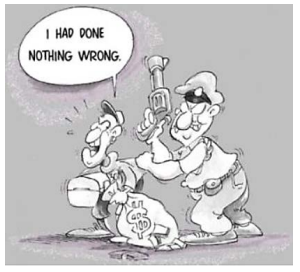
Na frase apresentada, a estrutura had done é formada por
an auxiliary verb followed by a past participle.
a main verb followed by a base form.
a simple verb followed by an –ing form.
a modal verb followed by an infinitive.
A sentença em que o verbo é usado corretamente é:
She don’t likes coffee, but she drinks tea every morning.
They always goes to the gym after work.
He didn’t go to school because he was sick.
I am study English every day at night.
Leia o texto a seguir.

A ilustração apresentada mostra uma atividade de sala de aula que utiliza a personagem Bossy Bella para ajudar os alunos a compreenderem o uso dos verbos para:
give orders or instructions.
describe ongoing actions.
talk about past habits.
express future plans.
The verb "coming" is conjugate is what tense of English language?
Present continuous.
Present perfect.
Past simple.
Past perfect.
Future simple.
Interpreting the verb choice in the clause “sugar is also tough to dodge”, one can infer a metaphorical construction that equates sugar to a pervasive and elusive threat in modern diets.
Certo
Errado
Analyze the statements about the fragments in uppercase letters in Text 1, then choose the correct option.
I – All of the fragments in uppercase letters are examples of the Simple Past tense.
II – All of the fragments in uppercase letters refer to past actions in some way.
III – In “have initiated”, the verb tense refers to a recent action at the time the news was written.
IV – None of the fragments in uppercase letters contain a past participle form.
V – The verb “created” is used in this verb tense because it refers to a past action in a specific time.
All statements are true.
Only statements II and III are true.
Only one statement is false.
All statements are false.
Only statements I and IV are false.
Choose the option that completes the paragraph below correctly.
Canada is a world leader in both the proportion of women in its military and the areas in which they can serve. In fact, women _______ in Canada's military for over a century and today ______ a pivotal role in defending Canada's safety and security. “Our objective is that by 2026, 1 in 4 Canadian Air Force members _____ women. Successful recruiting efforts _______ the percentage of women enrolling in the Regular Force increase from 13.2% in 2015/16 to 17.2% in 2017/18," said Admiral Art McDonald.
(Adapted from https://www.navalnews.com)
had been serving / has played / will be / saw
have been serving / play / will be / saw
are serving / has played / has been / had seen
will be serving / play / will have been / have seen
served / are playing / will have been / had seen
The word “hope”, in the comic strip, is used both as an adjective and as a verb.
Certo
Errado
Which of the alternatives below is NOT one of the regular uses of the verb tense in the sentence “the voting window for nominations has been extended until January 17” (l. 14–15)?
Stating that one past event happened before another past event.
Mentioning past actions without saying when they happened.
Talking about actions that have not finished yet or still affect the present.
Talking about recently completed events.
Sharing experiences in life.
Consider the pronunciation of the following irregular verbs and their forms:
Lead – Led, led
Feed – Fed, fed
Bleed – Bled, bled
Breed – Bred, bred
Read – Read, read
Which statement is correct?
The past and past participle forms of all the verbs are pronounced the same as their base forms.
The base form "Lead" is pronounced the same as its past and past participle forms.
The verb "Read" has the same spelling in all forms, but its pronunciation differs between the base form and the past/past participle forms.
Only two verbs follow the same vowel sound pattern in their base, past, and past participle forms.
The verb "Bleed" is pronounced differently in its past participle compared to its past form, the same happens with the verbs "Lead” and “Breed”.
The verb phrase in “Great progress has been made” (1st paragraph) is in the
present continuous, passive voice.
present continuous, active voice.
present perfect, passive voice.
past perfect, passive voice.
past perfect, active voice.
Assinale a alternativa em que o verbo está corretamente empregado na frase em inglês:
She go to school every day.
They was happy at the party.
He works in a hospital.
I am play soccer now.
Select the sentence that is grammatically correct and conveys a past hypothetical situation:
“If he had known the time, he would arrive earlier.”
“If she would have studied more, she will pass the exam.”
“If they had joined us, we would have finished the project faster.”
“If they knew the rules, they could have been more cautious.”
Analise a frase abaixo e assinale a alternativa que classifica corretamente o uso do tempo verbal:
"She has been studying English for two years."
Past Perfect Simple.
Present Perfect Simple.
Present Perfect Continuous.
Past Perfect Continuous.
Which of the alternatives below is NOT a regular use of the verb tense in the structure from the cartoon “you and I have had our differences”?
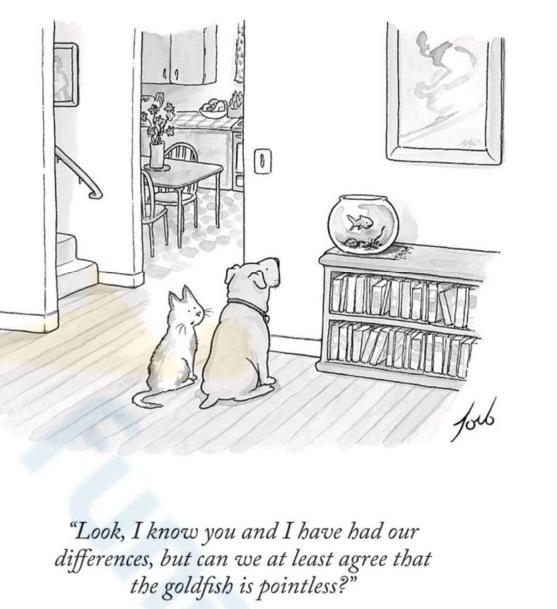
Talk about actions that started in the past and continue in the present.
Refer to actions that are completed in an unspecified past.
State something will happen in the near future.
Talk about recently completed actions with effect on the present time.
Mention life experiences without specific time reference.
Relate the main characteristic of irregular verbs in English and choose the correct alternative.
Irregular verbs always add "-ing" to indicate the past tense form.
Irregular verbs follow a consistent pattern by adding "-ed" to form both the past tense and the past participle.
Irregular verbs modify their internal structure or remain unchanged in their past forms without following a regular pattern.
Irregular verbs change only in the thirdperson singular form in the present tense.
What is the past tense of the verb "mow" in the context of cutting grass?
Mowed
Mow
Moweded
Mew
Muw
Leia o trecho em português e a frase correspondente em inglês. Depois, assinale a alternativa que apresenta a tradução correta e o uso adequado do tempo verbal e pronome:
Português:
"Ela estuda inglês todos os dias."
Inglês:
She studying English every day.
She studies English every day.
She study English every day.
She is study English every day.
Gibran's quote is an instance of use of conditionals in a sentence. Complete the blank spaces to make the sentence an improbable past condition.
“if the teacher______________ indeed wise, he_______________ you into the house of his wisdom, but rather___________ you to the threshold of your own mind.”
would be — would bid — would lead.
be -would not bid — would lead.
was — would not bid — would not lead.
were — would have bid —led.
were -would not bid — lead.
In the phrase "expect the new flavours to fly off the shelf," the expression "fly off" is an example of which grammatical construction?
Phrasal verb.
Modal verb.
Causative verb.
Prepositional phrase.



