







Seu próximo nível começa aqui
Com a Assinatura Ilimitada, você tem tudo que precisa para sua aprovação.
Com a Assinatura Ilimitada, você combina prática, teoria e método em uma única assinatura com tudo que você precisa para sua aprovação.
Complete the sentence below with the correct verb. Choose the correct answer.
“My friend: Did you hear about what happened in Argentina?
Me: No, I didn’t. Tell me, please!
My friend: The truck drivers _________ on a strike.”
go
going
have gone
had gone
Complete the sentence below with the correct verbs. Choose the correct answer.
“He _________ his classes when he _________ the news.”
plan / hear
planned / heard
was planning / heard
have planned / was hearing
Consider the sentence below from the text and the following assertives:
(3º§) "As she waited for sniffer dogs to check her bag, she wasn't too concerned about the Russian military build-up on Ukraine's borders."
I. The word "sniffer dogs" could be translated as "cães farejadores".
II. The word "waited" is a verb.
III. The word "concerned" could be replaced by "aid".
Which one(s) is(are) CORRECT?
Only I and II.
Only II.
Only I.
Only I and III.
Complete a frase com o verbo correto: “She ……….an apple pie.”
eats
writes
Works
stops
paints
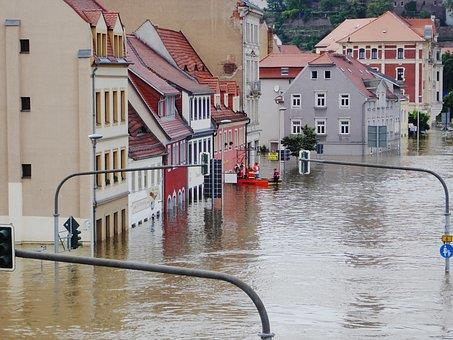
“The Civil Protection Agency (CPA) urged people to leave flooded homes, for it’s essential that those displaced persons __________________ in shelters, which will keep them away from endangered spots.”
(Available in: https://pixabay.com.)
Fill in the blank above the image with the appropriate verb form:
Be
Are.
Were.
Will be.
In the sentence “It doesn't merely involve drawing a family tree” (line 2), the auxiliary “doesn't” is conjugated in the 3rd person singular to agree with the subject “It”.
Certo
Errado
Richard’s bookstore_____ for sale for ten months. Apparently, it_____ down soon.
is – closes.
is being - is closing.
has been - is going to close.
has being - will close.
About the verbs highlighted in the lyrics (smiled, crowded, walked), choose the best option:
The –ed ending in these verbs are pronounced the same way.
The –ed ending in these verbs are all voiceless sound.
The –ed ending in these verbs are all voiced sound.
The –ed ending in these verbs are pronounced in different ways.
The –ed ending are not pronounced.
Mark the alternative that correctly fills in the blanks of lines 13 (two occurrences) and 16 (two occurrences) respectively, in the text.
is – is – are – be
are – is – is – be
is – be – be – is
are – are – is – be
are – be – are – is
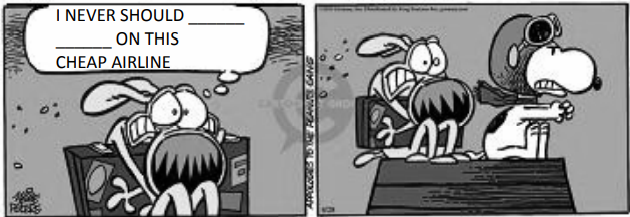
Choose the alternative that correctly completes the comic strip.
Taken from https://www.thecomicstrips.com/subject/The-Airplane+Pilot-ComicStrips.php
has flew
have flew
has flown
have flown
Fill in the blank above with the appropriate verb form.
Can we.
We can.
We will.
We won’t.
If I ______ you, I’d take the risk.
were
am
have been
would be
In text 6, the verbs “had become”, “had lived”, “had grown up” and “had got married” are used in the
present perfect to express actions carried out by Cora Coralina before she moved back to the city of Goiás.
past simple to express actions carried out by Cora Coralina before she moved back to the city of Goiás.
imperfect tense to express actions carried out by Cora Coralina before she moved back to the city of Goiás.
past perfect to express actions carried out by Cora Coralina before she moved back to the city of Goiás.
preterite to express actions carried out by Cora Coralina before she moved back to the city of Goiás.
Read the sentences below.
1. Andy reads comic books.
2. Sandy sings in the bathroom.
3. My sister helps in the kitchen.
The verbs in bold are in the:
Simple Past.
Simple Present.
Present Perfect.
Present Continuous.
Assinale a alternativa que responda corretamente à pergunta: qual é o tempo verbal utilizado na seguinte frase?
"Despite its importance, the Pantanal faces a number of threats that are common to the three countries".
Immediate Future.
Present Continuous Tense.
Simple Future.
Simple Past Tense.
Simple Present Tense.
In the sentence “it doesn't work with sunglasses” (lines 9 and 10) the auxiliary verb “doesn’t” was used to agree with the 3rd person singular “it”.
Certo
Errado
As palavras bring e think têm a formação do passado irregular e com a mesma pronúncia final – brought e thought.
Também tem formação de passado irregular com a mesma pronúncia final o seguinte par de verbos:
blow e fly.
burn e build.
arise e forbid.
fling e flee.
fly e fling.
The sentence “Am I going to have another baby?” (l. 04) has present continuous structure, but it is not describing an ongoing or current action. It is actually used to mention a possibility or a plan for the future. Find the INCORRECT combination of verb tense (underlined) and use below.
“We always point people to the silverware drawer” – Simple present structure combined with a frequency adverb to talk about routine.
“The clothes had been stored there for years, but she only agreed to donate the boxes after a long conversation” – Past perfect combined with simple past, to show that both actions happened and finished in the past, but one happened before the other.
“The truck leaves at 4 pm” – Simple present to talk about future, when there is an action scheduled to happen.
“Editing is always the hardest part” – Present continuous to express routine.
“We have been doing this for a while” – Present perfect continuous, to emphasize the action has started in the past, is still happening, and will probably keep going on in the future.
Mark the option that completes the gaps in the second paragraph with the correct forms of the verb to be.
are – is – are – ‘s
was – are – will be – is
will be – are – was – was
are – ‘s – is – ‘s
were – is – are – are
In the last paragraph of the passage, the word “would” appears repeatedly, either in its affirmative or negative form. Mark the alternative that corresponds to its use here.
Conditional tense
Future in past
Unreal condition
Implied likelihood



