




Seu próximo nível começa aqui
Com a Assinatura Ilimitada, você tem tudo que precisa para sua aprovação.
Com a Assinatura Ilimitada, você combina prática, teoria e método em uma única assinatura com tudo que você precisa para sua aprovação.
It is correct to conclude from the meaning of the words that compose the expression "sustainable-use reserves," as used in the first sentence of the last paragraph of text CB2A6, that it refers to
areas where local communities are economically self-sufficient and able to sustain their livelihoods independently.
areas established to maintain natural ecosystems in an untouched state and protected from any human activity.
areas where the use of natural resources can continue over time without damaging the environment.
areas designed to promote economic development through the extraction of natural resources.
areas in which financial reserves are maintained to ensure the economic stability of local communities.
READ THE TEXT AND ANSWER THE THREE QUESTIONS BELOW
Liberating Adult Education, Animation and People Centred Democracy
Marjorie Mbilinyi
Adopting Issa Shivji’s paradigm, “The philosopher in Nyerere was informed by, and in constant search for, human equality and freedom, while the king in him was driven by the imperatives of building a nation-state” [Shivji 2020 Book Three: 2]. Mwalimu Nyerere advocated transformative pedagogy and liberating adult education, which he linked to nation building and peoplecentred participatory development, especially at grassroots level. He argued that adult learners have knowledge to share. They need to be encouraged to think, analyse critically and act on their own behalf so as to improve their situation. They thereby became active subjects, and participated equally in making key decisions on resource allocations at all levels and benefited equally. While referring to individual demands for freedom and dignity, Mwalimu emphasized the collective nature of these demands, and argued that the African people can only realize real democracy and freedom by uniting together so as to fight against neo-colonialism and corporate globalisation and to struggle for equitable, just development and economic liberation. At the same time, he was a powerful ruler who established an Executive with no checks and balances and focused on nation building and African liberation, not socialism. He denounced global elites and Northern based imperialism, but in the early years he rarely took action against the growth of a bureaucratic bourgeoisie in his own state and party. The failure to translate his ideals of equality and justice into a popular mass movement of workers, peasants, students and others contributed to the ultimate downfall of ujamaa. At the same time, he succeeded in sustaining national unity in an increasingly hostile context during the 1980s debt crisis and confrontation with the International Monetary Fund (IMF) demands for Structural Adjustment (SAP) and neoliberalism [Shivji 2020 Book Thre.
Fonte: Mbilinyi, Marjorie. "Liberating Adult Education, Animation and People Centred Democracy." Convergence 44.1: 3-16.
According to the text, analyze the statements below and mark (T) for True or (F) for False.
I. (T / F) Nyerere argued that real democracy and freedom could only be achieved through collective action by African peoples against neocolonialism and corporate globalization.
II. (T / F) Nyerere’s political project fully succeeded in transforming ideals of equality and justice into a broad popular mass movement of workers, peasants, students, and other social groups.
III. (T / F) Despite internal contradictions, Nyerere managed to preserve national unity during a hostile period marked by the 1980s debt crisis and pressures from the International Monetary Fund.
Choose the correct alternative.
T – T – T
T – F – T
F – T – T
T – F – F
Read the excerpt below and answer the question that follows.
‘‘The committee’s decision was met not with overt resistance, but with a subtle form of acquiescence that concealed deep-seated dissent. Beneath the veneer of compliance lay a quiet determination to subvert the policy through procedural inertia rather than direct confrontation’’.
In the context of the passage, the expression “procedural inertia” most nearly conveys the idea of:
An unintentional delay caused by bureaucratic inefficiency and lack of planning.
A deliberate strategy of passive resistance achieved by exploiting formal processes.
A temporary suspension of action due to uncertainty about legal authority.
A neutral adherence to established rules without ideological motivation.
Based on text 11A2-I, choose the option that presents the dimension of heteroglossia that refers to the coexistence of different speech types or discourses associated with particular social spheres.
perezhivanie
interculturality
multivoicedness
multidiscursivity
linguistic diversity
It is correct to infer from the ideas conveyed in the second paragraph of the text that the degree of effectiveness of electoral accountability varies according to the engagement of citizens in politics.
Certo
Errado
Based on the text, analyze the assertions below:
I. Environmental crimes and disputes over land ownership have only recently become a problem.
II. The three activities mentioned in the first paragraph are natural events.
III. Startups and global teams are joining efforts to make protection technology more available.
Choose the correct answer:
Only I is correct.
Only II is correct.
Only III is correct.
Only I and III are correct.
All three assertions are correct.
The author of text 10A1-IV claims that language
equals a private thesaurus.
has a subjective side to it.
is similar to a riddle.
is a controlled but fictional system.
is a huge amount of definitions.
Based on text 10A1-IV, judge the following items.
I According to the ideas conveyed in the text, in a monolingual culture, there are as many different languages as there are people.
II The term “speech-atoms” (last sentence of the text) refers to the many idiolects of a language.
III It is correct to conclude from the use of “verbalized”, in the last sentence of the first paragraph, that the statements made in the text do not apply to non-verbal people.
Choose the correct option.
Only item II is correct.
Only item III is correct.
Only items I and II are correct.
Only items I and III are correct.
All of the items are correct.
According to the ideas conveyed by text 10A2-I,
a specific cognitive trait, verbal fluency, has been identified as a significant factor linked to a longer lifespan.
longevity is directly and exclusively determined by a person's dental health and economic well-being.
people who outlive all predictions are those who have never been subjected to any form of scientific research.
the Berlin Aging Study is the most comprehensive research ever conducted on the relationship between aging and intelligence.
intelligence is a simple, single characteristic that can be easily measured through memory and mathematical logic tests.
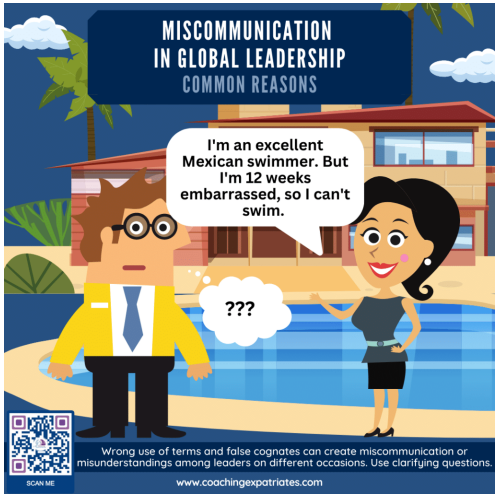
Available in: https://www.coachingexpatriates.com/why-miscommunication-happens-in-global-work-environments/. Acess on: Feb. 2, 2026.
According to the text, there is misunderstanding because
the character is embarrassed to swim because she is not dressed in an appropriate manner.
miscommunication takes place because of the improper use of the cognate word “excellent”.
the woman says she does not know how to swim, after having said she is a fine swimmer.
miscommunication takes place because of the improper use of the word “embarrassed”.
the character is embarrassed to swim because she has not practiced for twelve weeks.
Exploring digital multimodal text in EFL classroom: Transformed Practice in Multiliteracies Pedagogy
[...] In the twenty-first century, education is faced with the sophisticated technology and advance communication because people are now living in a global society with increasingly different local contexts. Students have discovered various ways of using media to communicate, collaborate, and create in the digital space. Much research has been done on multiliteracies pedagogy and a substantial number of studies have investigated multimodal texts [...].
This new environment changes the concept of text from reading and writing to be multimodal. Consequently, education needs to improve the quality of leaners that have high level of creativity to understand multimodal text. Multimodalities are always integrated with the advanced technology where information comes from many sources in different forms [...]. Not only do English teachers need to include the students with all their diversities in situated contexts, but they also need to engage them in multiliteracies.
Multiliteracies pedagogy concerned with the use of multimodal layers of learners’ world in the classroom to engage students with the tools and technology that they are already familiar with. It has been considered that multiliteracies pedagogy is a meaningful way that can effectively engage students in teaching and learning practice by offering four benefits. First, it strengthens the relationship between teacher and students. Second, it increases the inclusivity for multiplicity. Third, it develops performances of literacy practices. Last, it creates positive classroom community. The concept of multiliteracies pedagogy is has four major components which can be implemented in teaching practices. Those components are situated practice, overt instruction, critical framing, and transformed practice. Every component has its important role in teaching and learning practice. They do not stand in linear hierarchy, but each of them can happen repeatedly, randomly, or simultaneously in complex ways [...].
Situated practice means the involvement of meaningful practices that able to relate to students’ experience and background. Through situated practice, teacher needs to construct the students’ life world experience and putting the meaning-making process in the real-world context. Overt instruction is defined as an active interaction between teacher and students that helps students to understand what they learn. Critical framing is similar with analyzing the social and cultural meaning of texts by assessing particular designs of meaning. Transformed practice is transferring the previous design to create a new design of text in a different context and cultural site. With transformed practice, students are expected to apply the knowledge they gained (from situated practice, overt instruction, and critical framing) appropriately and creatively. This involves activities such as writing, drawing, problem-solving [...].
Available in: https://journal.ipm2kpe.or.id/index.php/LEEA/article/view/1416. Acess on: Feb. 10, 2026. (Adapted).
The article affirms that
with globalization and technology, traditional texts should be eradicated in teaching English as a Foreign Language.
multiliteracies pedagogy entails teaching students new technological tools, compatible with the new reality today.
working with multimodalities entails globalization and, therefore, teachers need to standardize learners’ contexts.
educators need to work with situated contexts, consider students’ differences and involve them in multiliteracies.
situated practice is the major component of multiliteracies pedagogy and, therefore, it needs to be applied first.
Multiliteracies and multimodal literacies are a comprehensive response to the mobile semiotics of contemporary society. Flows of people, images and ideas, have meant the impact is experienced globally as well as locally and contextually. Along with New Literacy Studies, multiliteracies framework has as its central focus a socially just and culturally inclusive curriculum. Further, informed by critical pedagogy and critical literacy, multiliteracies has, at its conceptual centre, a transformative pedagogy aimed at effective learning across social and cultural differences, and across different learning styles. To attend to the change in social futures, multiliteracies has, at its nexus, student knowledges, lived experiences and student centred resources.
Central to multiliteracies is the concept of Design. The New London Group indicates the numerous ways by which signification occurs. More recently, as Kalantzis and Cope (2005) describe it, “there is a nice ambiguity in the word ‘design’. Design can denote morphology or the sense of invisible inner structures or inherent relationships of cause and effect” (p. 41). Kalantzis and Cope (2005) use Design in a comprehensive manner to denote “agency” as the “stuff of the characteristically self-conscious pedagogical moves, teaching frameworks and organisational forms of education as we currently understand it” (p. 41). In brief, as Falk (2001) observes, for the New London Group, Design expresses “the active role of the literacy learner in constructing new meaning from existing resources” (p. 314). Because Design rejects isolated, abstract and decentralised learning, it demands “production of the new rather than replication of the old” (Kress, 2000, p. 141). In Design, the learner is actively creating and re-creating while having choices in learning that did not exist in traditional print-based models of literacy.
The modes or Design concepts are: linguistic, visual, audio, spatial and gestural; however, the New London Group do not perceive each of these literacies as singular and isolated from other literacies. For students who engage with the four knowledge processes there is deep understanding and proactive learning:
• Experiencing: through the known and the new, where the evidence data from the prior knowledge and life experience of the learner is combined with immersion in new knowledge and new experience in meaningful settings.
• Conceptualising: abstract concepts and theoretical synthesis by the process of naming and theorising. This enables the learner to define, apply concepts and comprehend the abstract generalised meanings in concepts and visual representations.
• Analysing: analysing, interpreting functions capably, through the comprehension of the role of knowledge and critically by analysing purpose and intentions.
• Applying: knowledge appropriately and creatively by understanding suitable situations to apply knowledge and extending it to create new knowledges.
IYER, Radha; LUKE, Carmen. Multimodal, Multiliteracies: Texts and Literacies for the 21st century. In: PULLEN, Darren L.; COLE, David R. Multiliteracies and Technology Enhanced Education. Social Practice and the Global Classroom. Hershey and New York: ICI Global, 2010, p. 22. (Adapted).
After reading this passage on multiliteracies and design, choose the alternative that best conceptualizes those two words.
Whereas multiliteracies can be defined as knowledges students possess in relation to the various forms of communication students have in their hands, design has to do with ways students’ acting as meaning makers facing knowledge challenges.
Multiliteracies and design are related in certain ways but they are not closely linked as the former deals with circulation of knowledge through texts viewing social justice and equality, and the latter has to do with ways of tackling those texts.
We can say that multiliteracies and design are two of a kind. Both deal with knowledge production and lead to the same response, that is, production and interpretation of texts in their various modes and forms of communication.
There is no relationship between multiliteracies and design, and that can be confirmed by the various definitions provided by the various scholars mentioned. The former has to do with technologies and the latter with students.
Multiliteracies can be defined as means of communication in the form of written texts that circulate in contemporain society and design is the way texts are produced and put into circulation as they relate to consumerism.
Read these definitions of global and multicultural education.
Chapter 3
Theoretical Foundation of Critical Literacies and Global and Multicultural Education
In this chapter, I invite the reader to a more in-depth discussion on critical literacies from global and multicultural perspectives by presenting important theoretical constructs of each field. I first provide a historical and theoretical review of global and multicultural education, followed by the literature review of critical literacies, including relevant definitions. Overall, this chapter serves as the literature review of the three areas. Through this review, I attempt to answer the question on why global and multicultural perspectives matter in the field of critical literacies.
Global Education
The notions of “global” and “multicultural” are different in their theoretical orientation. The former was developed in response to international issues, while the latter was developed in response to national minority struggles in the U.S. This difference of visions and orientations is important as it highlights the difference in scope: global education traditionally is concerned with educational dilemmas that are relevant across nations and continents. It, therefore, covers a broader spectrum of issues such as intercultural relations. Rapid globalization driven by the Internet and human migration highlighted the need for global education and propelled scholarly attention to such matters. Philosophically speaking, global education is based on recognizing core human rights and it pertains to the notion of moral universalism. Namely, it is based on the view that human beings are created equal.
Multicultural Education
Research on multicultural education has flourished around the globe. In particular, in the U.S. historical context, it emerged with the American Civil Rights Movement. Unlike global education, multicultural education focuses more on national issues, specifically learning about cultures within the state. With its original purpose from the early 1960s and 1970s to address racism in schools and societies, early discussions on race and ethnicity focused on African Americans and were spearheaded by African American scholars. This type of ethnic studies has been the first phase in the development of multicultural education as a field. Since then, more multicultural theorists began to analyze the power issues underlying race and inequality, as well as other topics such as social class gaps and economic discrimination.
YOON, Bogum. Critical Literacies. Global and Multicultural Perspectives. New York: Springer, 2016, pp. 26-29. (Adapted).
We could define the idea of global and multicultural literacies respectively as
international issues; local issues.
situated learning; ethnical issues.
philosophical approach; equality.
African perspective; equality.
civil rights; racial problems.
De acordo com o texto,
a Microsoft recorria ao Double Irish desde 2017, sem o conhecimento das autoridades americanas.
o esquema CAIA proporciona até o dobro da proteção fiscal do Single Malt na Irlanda.
a lgperchaun economics affair proporcionou um crescimento real de 26,3% do PIB da Irlanda em 2015.
a Apple transferiu US$300 milhões de seus ativos tangíveis para a Irlanda, contribuindo para o crescimento econômico daquele pais.
os prejuízos causados pelas BEPS tornaram esses esquemas alvo de forte regulação global.
Which alternative best reflects Spain’s proposition?
Spain is deferring to EU-wide legislation and has declined to pursue any independent national restrictions on youth social media usage.
Spain has irrevocably enacted a nationwide ban on social media for all individuals under 18, eliminating executive liability for user-generated content.
Spain has opted to regulate only foreignowned platforms, exempting domestic companies from age-based limitations and content oversight.
Spain plans to introduce a ban on social media use for those under 16, subject to parliamentary approval, while extending legal responsibility to company executives for illegal or harmful content and its algorithmic amplification.
Spain’s initiative focuses solely on investigating artificial intelligence tools, without addressing age thresholds or corporate accountability.
Consider the excerpt taken from the text:
“The realization that there are today more nonnative speakers than native speakers of English in the world […] has led to the rethinking of present-day practices in teaching, teacher preparation, and the writing of textbooks.”
The verb form “has led” is used in this context because it:
Refers to a completed action in the distant past with no relevance to the present.
Emphasizes the present result of a process that started in the past.
Describes an action that is temporary and limited to the current moment.
Indicates a habitual action that occurs regularly in academic research.
In the fragment "The temperature rise associated with the growing volume of heat-trapping gas has kicked in" (second paragraph), "has kicked in" is used to indicate that the temperature rise has started to take effect.
Certo
Errado
Consider the excerpt below from two different genres:
(1) News report:
"Authorities confirmed that the bridge will remain closed until structural inspections are completed."
(2) Personal narrative:
"I remember standing by the bridge that morning, watching the workers check every beam as if the whole town depended on it."
Mark the alternative with the logical linguistic difference about these two genres:
Both texts rely on impersonal constructions to avoid subjective involvement and maintain factual neutrality.
The news report uses evaluative adjectives to build emotional connection, while the narrative avoids any subjective stance.
The personal narrative employs passive voice to obscure agency, whereas the news report highlights the narrator’s personal perspective.
The news report favors objective, factual language with agentless passives, while the personal narrative uses subjective, experiential language to foreground the narrator’s viewpoint.
The narrative employs technical terminology to ensure precision, while the news report uses figurative language to engage the reader.
In the end of the text, it is clear the twins:
were happy to get free bus rides.
had decided to obey their parents.
held a quiet grudge against their parents.
were not aware their mother was pregnant.
helped their mother on the bus ride to the hospital.
The text addresses the theme of burnout and how right-to-disconnect laws could help improve workers’ well-being.
The adoption of such laws is likely to result in:
benefits to employees and management
optimization of skills and competencies
development of rules and regulations
stimulus to learning and achievement