








Seu próximo nível começa aqui
Com a Assinatura Ilimitada, você tem tudo que precisa para sua aprovação.
Com a Assinatura Ilimitada, você combina prática, teoria e método em uma única assinatura com tudo que você precisa para sua aprovação.
The coordinator asked the staff to avoid changes during class time. Complete the sentence: “The coordinator advised the staff to avoid ____ the schedule during class time.”
Changing it.
To change it.
Change it.
Changed it.
Choose the option that completes the sentence in a natural way. “I ____ at this school since 2018, so I know the routines well.”
Worked.
Had worked.
Was working.
Have worked.
Text for question 56
At around 6:30 p.m., I decide I’m not going to sleep at the hospital tonight. I need to shower and eat real food. I call my best friend, Yara, and tell her I’m on my way to her house. Everything in Gaza is within walking distance, but I’m absolutely exhausted. I realize with dread that, if I’m not mistaken, I’ve left my wallet in mama’s bag, and I don’t have any money at all. So I do something embarrassing, and ask a taxi driver if he can drive me to Yara’s for free. He agrees on one condition: ‘When I get killed’, he says, ‘post a nice picture of me online, and ask people to pray for me.’
Everyone in Gaza knows that they’ll eventually die, and that it’s only a matter of time. I smile at the taxi driver and assent.
ALAQAD, Plestia. The Eyes of Gaza: A Diary of Resilience. New York: Little, Brown and Company, 2025.
Read the excerpt by the young journalist Plestia Alaqad, “The Eyes of Gaza”, and choose the statement that most adequately points out the discourse effect of the verb tense used:
The author uses the simple present because it refers to a sequence of events.
The author uses the simple present to express informality, since the narrative demands the simple past.
The author uses simple present in negative form three times to express uncertainty.
The author uses present simple because she was writing those words at the exact moment, she was remembering them.
None of the options above is adequate.
About the sentence:
“She had been working on the project before the manager arrived.”
Choose the alternative with the right tense–aspect combination used in the verb phrase “had been working”:
Past perfect progressive, indicating a continuous action that was in progress and led up to another past event.
Future perfect, expressing an action to be completed before another future event.
Past continuous, emphasizing simultaneity between two past events.
Present perfect, showing a past action with present relevance.
Simple past, expressing a completed action prior to another past action.
Sobre as características das vozes verbais em inglês, assinale a alternativa correta.
Na voz ativa, o sujeito recebe a ação expressa pelo verbo.
A voz passiva é formada pelo verbo to have seguido do particípio passado do verbo principal.
Na voz passiva, o sujeito sempre precisa ser acompanhado pelo agente da ação introduzido pela preposição by.
Na voz passiva, o sujeito sofre a ação expressa pelo verbo, sendo sua formação mais comum realizada com o verbo to be seguido do particípio passado do verbo principal.
A voz passiva em inglês é formada pelo verbo to be seguido do verbo principal com a terminação -ing.
Select the alternative that correctly completes the sentence.
She ______ to Paris three times since 2020.
went
goes
has gone
had gone
was going
Select the alternative that presents the CORRECTverbal structure according to formal English grammar, specifically regarding the use of the subjunctive mood in a professional context.
The legal council recommended that the corporation revised its privacy policy immediately to comply with the new international data regulations.
The legal council recommended that the corporation revises its privacy policy immediately to comply with the new international data regulations.
The legal council recommended that the corporation revise its privacy policy immediately to comply with the new international data regulations.
The legal council recommended that the corporation must revise its privacy policy immediately to comply with the new international data regulations.
The legal council recommended that the corporation will revise its privacy policy immediately to comply with the new international data regulations.
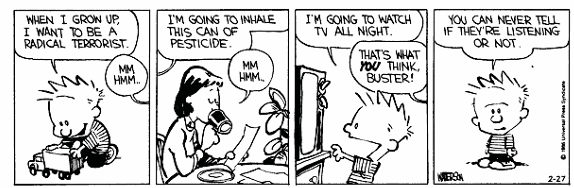
(Available in: https://www.todamateria.com.br. Accessed on: January 2026.)
The study of verb tenses, funded by verbal and nonverbal data in the comic strip above, enables students to reach understanding that the “going to” use employed matches
Future action already decided as the one taking place.
Statement of actions occurring at the time of speaking.
Description of situations that are considered temporary.
Talking about some events happening in a repeated way.
Some irregular verbs in English show a vowel change when forming the past tense. For example, the verb fight → fought illustrates a common pronunciation pattern in irregular verbs.
Identify the group of verbs whose past forms follow the same pronunciation pattern as the example above.
make – build – keep
sing – ring – drink
go – see – take
write – speak – come
bring – buy – think
Which sentence expresses future using will?
I go to travel tomorrow.
I traveled tomorrow.
I traveling tomorrow.
I travels tomorrow.
I will travel tomorrow
Choose the alternative in which the irregular verbs are correctly used.
The controversy had arose before the committee forbade the publication of the report.
By the time the suspect had fleed, the investigators seek new evidence.
The hikers had stridden across the valley before the storm arose.
The researcher had foresaw the risks before the policy binded the institutions to new rules.
The old machine had grinded the grain before the workers sweared they had followed the instructions.
Choose the alternative in which the gerund form functions as a noun.
The teacher is explaining the instructions to the students.
The sleeping child did not hear the alarm.
Reading improves vocabulary and critical thinking.
The students were discussing the results of the activity.
The movie was boring for most of the audience.
Subject-verb agreement is one of the fundamental principles of English grammar and requires the verb form to correspond correctly to the subject in number and person. Errors in verbal agreement frequently occur when learners confuse singular and plural subjects or when collective and uncountable nouns are involved. In academic and professional communication, accurate agreement contributes to clarity and grammatical precision. Read the sentences below carefully.
I.The results of the experiment was discussed during the scientific conference yesterday.
II.The professor and the assistant are preparing the material for the final presentation.
III.The information provided by the researchers were considered highly relevant by the committee.
IV.The new technologies developed by the company have improved industrial productivity.
V.The manager of the international projects organize the weekly administrative meetings.
Based on the sentences above, analyze the following statements. T (True) or F (False).
(__)Sentences I, III, and V contain errors of subject-verb agreement.
(__)Sentence II presents correct subject-verb agreement because the compound subject requires a plural verb.
(__)In sentence III, the verb should be replaced by was considered because information is an uncountable singular noun.
(__)Sentence IV contains an error because the plural subject technologies should be followed by the verb has improved.
Choose the correct alternative considering that:
T = True
F = False
T − F − T − F
T − T − F − F
T − T − T − F
F − T − F − T
Identify the two correct and two wrong interpretations of the phrasal verbs used in the text and mark T (true) and F (false).
( ) The phrasal verb "lined up" in the first paragraph indicates that the upcoming books are physically standing in a straight queue at the printing press.
( ) The expression "gotten in on" in the third paragraph suggests that Penguin Books has started participating in the same profitable trend that the British Library began.
( ) The expression 'lined up' is used idiomatically to indicate that more volumes are scheduled or prepared for future release.
( ) The term "back in" in the final sentence is used to describe the physical movement of a book being placed inside a printing machine.
Which alternative CORRECTLY fills in the parenthesis above?
T - F - T - F.
T - T - F - T.
F - T - T - F.
T - F - T - T.
Consider paragraphs 06 and 07 of the text:
Poland’s reading habits have been in steady decline for years. A 2024 survey by the National Library of Poland found that only 41 percent of respondents had read at least one book in the past year. According to Tomasz Makowski, director of the National Library, the legacy of war has shaped these numbers. During World War II, Poland lost 70 percent of its libraries.
“We had several generations that did not see their parents or grandparents in front of a wall of books,” Makowski says. “Reading is [also] not something associated with adulthood, but with schools, teachers, librarians, and usually mothers reading to children.”
About the underlined conjugations, it is correct to say that they are examples of
Present Perfect Continuous Affirmative, Present Simple Affirmative, Past Perfect Simple Affirmative, Past Simple Affirmative.
Present Perfect Simple Affirmative, Past Simple Affirmative, Past Perfect Continuous Affirmative, Past Simple Negative.
Present Perfect Simple Negative, Past Simple Affirmative, Past Perfect Continuous Affirmative, Past Simple Negative.
Present Perfect Simple Negative, Present Simple Affirmative, Past Perfect Continuous Affirmative, Past Simple Affirmative.
Present Perfect Simple Affirmative, Past Simple Affirmative, Past Perfect Simple Affirmative, Past Simple Negative.
Complete a frase com a forma verbal correta:
"Mary ________ to London three times this year."
went
has been
was going
goes
A dialogue has “She teaches on Mondays, but she is teaching an extra class this week.” Which interpretation of present forms is CORRECT?
Present continuous marks permanent facts, while present simple marks actions in progress, which makes teaches describe a current action and is teaching describe a permanent schedule.
Present simple is used for actions happening at the moment of speaking, while present continuous expresses habits, which makes teaches refer to what happens now and is teaching refer to routine.
Both forms are interchangeable in classroom English, and the difference is mainly stylistic, so teachers can treat teaches and is teaching as equivalent in meaning.
Present simple typically expresses routine or repeated actions, while present continuous highlights a temporary or currently developing situation, matching Mondays as routine and this week as temporary.
Present continuous is preferred for teaching verbs, so is teaching fits routine and teaches fits emphasis, because continuous carries the neutral form in modern textbooks.
Considering the fragment "We'd settled into a virtuous no-TVonschool-nights routine” (sixth sentence of text 10A2-II) choose the option that correctly presents the verb tense used in "We'd settled."
future perfect
present perfect
past perfect
simple past
past continuous
Read the sentences below and choose the alternative that correctly completes them, respectively.
1 - Would you mind ______ the window?
2 - Would you mind ______ a little quieter?
3 - Would you mind ______ me with this exercise?
open – be – help
to open – being – helping
opening – being – helping
opened – was – helped
to opening – to being – to helping
Consider the sentence taken from the text:
“With each step, I sank a few centimetres.”
In this sentence, the verb sank is:
the past participle of sink, used in a perfect tense
the simple past form of the irregular verb sink
a regular past form of the verb see
a present tense form of the verb think used for narrative effect
a modal verb expressing possibility



