







Seu próximo nível começa aqui
Com a Assinatura Ilimitada, você tem tudo que precisa para sua aprovação.
Com a Assinatura Ilimitada, você combina prática, teoria e método em uma única assinatura com tudo que você precisa para sua aprovação.
She was given a scholarship as well as the award.
According to the context, the bold item can be replaced by:
Therefore.
By the way.
Besides.
As soon as.
In the sentence, “they gently put it down in the middle of the freshly mown lawn”, the underlined word refers to:
the family.
the lavender.
the balustrade.
the bedroom door.
the old brass bed.
Schools of thought: can mindfulness lessons boost child
mental health?
Children are taking 10 minutes out from the hurly burly school
day to reflect on their thoughts and their feelings. Some ground
themselves by thinking about their feet on the floor, while others
concentrate on their breathing.
This is mindfulness, the lessons quickly growing in popularity
as an antidote to the stress of being a young person in the 21st century,
be it pressure to perform in exams, social media, or the obsession with
body image that is reported to even affect primary age children.
Children are learning about their brains and how to deal with
unruly thoughts – to control emotions such as anger and fear. It is no
longer head, shoulders, knees and toes, but amygdala, hippocampus
and pre-frontal cortex.
The most recent NHS survey of young people’s mental health
in 2017 shows one-in-eight 5- to 19-year-olds in England has a
diagnosable mental health condition. Hospital admissions for anorexia
alone more than doubled in the eight years to 2017/18.
Stress is a known barrier to learning and a growing number of
schools are targeting the emotional health of pupils through schemes
such as meditation, mindfulness and the provision of mental health first
aiders and buddies.
The Mental Health Foundation charity wants emotional
wellbeing to be at the heart of the school curriculum, and has chosen
body image as the key theme of this year’s Mental Health Awareness
Week. Dr Antonis Kousoulis, its assistant director, said its survey last
year found 47% of people aged 18-24 had experienced stress over their
body image to the extent of being overwhelmed or unable to cope.
“Social media has certainly played a part,” he says. “Historically, it was
the mirror that was the main driver of perception of our image and how
we thought others perceived us. Nowadays, young people are exposed
almost on a 24/7 basis to manipulated and heavily edited images,
whether that’s in advertising or photos of their friends.”
Over the past five years there has been a proliferation of
mindfulness organisations and companies selling lesson plans and staff
training to schools. But does it work?
Secondary school teacher Richard Burnett, who founded the
Mindfulness in Schools Project 10 years ago, warns against “quick fix”
approaches. “We are a charity started by teachers who wanted to teach
children how best to manage their thoughts and feelings and deal with
the rollercoaster of being a young person,” he says.
It has two training courses for teachers – one aimed at
secondary students and another for younger classes. “It’s about training
your attention to notice what is going on. If you are aware of that, you
can choose how to respond, for example to manage the amygdala, the
part of the brain that detects fear and prepares a response,” he says.
Emotional disorders are on the rise, and we should instil
something in our children and young people about coping with stress,
advises Lee Hudson, the Royal College of Paediatrics and Child
Health’s mental health lead. But should it be mindfulness? There is
evidence that the process can bring benefits to adults, he says. “[But]
the evidence for its effectiveness with children is not yet sufficiently
robust and we need more research. However, some schools are rolling
it out and children seem to enjoy it – and it unlikely to cause harm.”
(Available in: https://www.theguardian.com/society/2019/may/16/mindfulnesslessons-
child-mental-health. Accessed on May 17th, 2019. Adapted.)
What does the phrasal verb “roll it out” in paragraph 10 mean?
to introduce
to discredit
to put away.
to reopen.
to concern.
In the text, “cram” (ℓ.8) can be correctly replaced by force, without changing the meaning of the sentence.
The word bough rhymes with:
dough
cough
rough
slough
tough
‘Otherwise’ (l.47) could be replaced by:
However.
Furthermore.
Or else.
Nevertheless.
If so.
A “smelter” (line 12) is used for shaking.
A palavra “that” (l. 10) refere-se a:
choice (l.10).
anxiety (l.10).
options (l.10).
Fobo (l.09).
feeling (l.09).
The fragment “sanctuary or fulfillment or some greater or lesser grail” (lines 7 and 8) could be correctly replaced with refuge or satisfaction or some greater or lesser prize.
No texto, a palavra “dawn”, na frase “even run a power-free coffee shop that’s open from dawn until dusk” pode ser traduzida em Português por:
Embaixo.
Orvalho.
Amanhecer.
Desânimo.
No texto, a palavra “duty”, na frase “It’s our duty” significa:
Uma obrigação ou responsabilidade moral.
Uma pessoa inexperiente em determinada tarefa.
Um termo técnico relacionado a dutos elétricos.
Um habitante de uma comunidade distante.
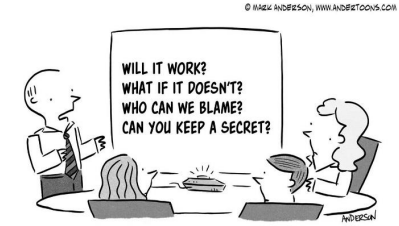
In the cartoon modal ‘can’, expresses:
Permission
Prediction
Request
Hability
Necessity
If I __ brave, I ___ abroad.
Was – would travel
Was – will travel
Were – would travel
Were – will travel
Were – will not travel
“Furious”
Very playful
Very calm
Very angry
Very interested
Very simple
Mark the sentence that is not true.
People often go to the hospital when they are healthy.
You can get a haircut at the barbershop.
When you need medicine, you go to the drugstore.
At the library you find calm atmosphere and many books.
Exercising at a sports center makes you stronger and fitter.
The word “sacred” underlined on the text could be appropriately substituted for:
Eternal.
Divine.
Rushed.
Irreplaceable.
Connected.
Brown (2007:390-397) states that “trends in the teaching of writing in ESL and others foreign language have, not surprisingly, coincided with those of the teaching of other skills, especially listening and speaking. […] Over the past few decades of research on teaching writing to second language learners, a number of issues have appeared, some of which remain controversial in spite of reams of data on second language writing.” Check the alternative that has three of those issues.
Complexity – formality – vocabulary.
Imitative – writing down – complexity.
Composing versus writing – process versus product – differences between L1 and L2 writing.
Permanence – production time - distance
Authenticity – voice and identity – complexity
In the first paragraph, the word “blast” (line 3) can be correctly replaced with number.



