




Seu próximo nível começa aqui
Com a Assinatura Ilimitada, você tem tudo que precisa para sua aprovação.
Com a Assinatura Ilimitada, você combina prática, teoria e método em uma única assinatura com tudo que você precisa para sua aprovação.
Conditional sentences, also known as if clauses, are used to talk about situations and their possible results. They can express real possibilities, hypothetical situations, or even imagined outcomes in the past, present, or future.
Based on the use of conditional sentences, which of the following sentences correctly uses a conditional (if clause)?
If we will leave earlier, we would have caught the train.
If I will see him tomorrow, I tell him about the meeting.
If she studies harder, she would have passed the exam.
If they arrive on time, we will start the presentation without delay.
If he would have called me yesterday, I answer immediately.
The sentence “Co-pilot Alistair Atcheson probably would have been sucked out of the plane too if he hadn’t been still wearing his safety harness from take-off.” is an example of the third conditional. Which of the alternatives below best describes the use of the third conditional?
It refers to something possible to happen in the future.
It describes a hypothetical situation about how things could have been different in the past.
It states a fact that always happens under certain conditions.
It refers to something very likely to happen.
It describes a situation that is possible to happen, but is highly unlikely.
Read the excerpt from Pride and Prejudice, by Jane Austin, and answer the question below.
"If I were determined to get a rich husband, I dare say I would adopt it.”
Adapted from: AUSTEN, Jane. Pride and Prejudice. Edited by James Kinsley. Oxford: Oxford University Press, 2008. Oxford World’s Classics.
Based on the excerpt and standard English grammar rules, it is correct to affirm that
the sentence uses the Second Conditional to express an unreal or hypothetical situation.
the sentence uses the Third Conditional to refer to things that are always true.
the sentence uses the Third Conditional to express a past situation that didn’t happen and its possible outcomes.
the sentence uses the First Conditional to describe a realistic action that might lead to a future result.
In the sentence “If the system fails, the backup will start automatically”, the structure represents a first conditional.
Certo
Errado
Which sentence contains a correct use of the third conditional to express regret about a past event?
If I study more, I will pass the exam.
If I had studied more, I would have passed the exam.
If I study more, I would pass the exam.
If I had studied more, I will pass the exam.
If I studied more, I would have passed the exam.
In “[...] there was on average a 30% increase in the number of Seattle Public Schools students who reported feeling [...]” (paragraph 8), the clause “who reported feeling” is an example of what kind of clause?
Adjective clause.
Adverb clause.
Noun clause.
Conditional clause.
Compound clause.
Analyze the following complex sentence structure: "Although the committee had been discussing the proposal for months, they reached no consensus because several members disagreed fundamentally with the underlying assumptions." The subordination pattern consists of:
One adverbial clause of concession and one adverbial clause of reason, both modifying the main clause.
Two coordinate clauses connected by "because" with embedded relative clauses modifying "members."
Parallel subordinate clauses expressing contrast and causation with identical syntactic structures.
A temporal clause introduced by "Although" and a causal clause with past perfect continuous aspect.
A conditional clause in the subjunctive mood followed by a resultative clause in the indicative.
“Without updating curricula to reflect the demands of the modern world, students may leave school without the skills needed to succeed in higher education or the workforce.” The conditional which best rephrases the idea expressed in this excerpt is:
if curricula are not updated to reflect the demands of the modern world, students may leave school without the skills needed
if curricula were updated to reflect the demands of the modern world, students would leave school without the necessary skills
if curricula have not been updated to reflect the demands of the modern world, students will leave school without any skills
if curricula will not be updated to reflect the demands of the modern world, students would not have the necessary skills
According to the article, mark the correct statement about Woven City.
When you order coffee, it is delivered by a drone.
A drone delivers coffee to your house every morning.
The house orders coffee beans when it notices yours are finished.
You need to order groceries from a drone.
The house appliances automatically prepare coffee every morning.
The word “though” (last sentence of the second paragraph) is used to introduce a concessive clause.
Certo
Errado
Mark the alternative that most accurately corresponds to the conditional form used to describe an unreal past situation and its unreal past result.
Zero Conditional, because it relies on the simple present to express facts that are always true when certain conditions occur.
First Conditional, because it predicts a likely future outcome that depends on a real and possible present condition.
Third Conditional, because it employs the past perfect in the if-clause and a modal + present perfect in the result clause to express a hypothetical past event that did not happen.
Mixed Conditional, because it blends two different time references to show how an unreal situation in one time frame influences a result in another.
Read the sentences below and identify which alternative correctly matches each conditional sentence with its type and meaning.
1- If you heat water to 100ºC, it boils.
2- If she studies hard, she will pass the exam.
3- If i were you, i would take that job opportunity.
4- If they had arrived earlier, they would have seen the beginning of the movie.
(1) First Conditional – prediction; (2) Zero Conditional – universal fact; (3) Third Conditional – regret; (4) Second Conditional – imaginary past.
(1) Zero Conditional – general truth; (2) First Conditional – real possibility; (3) Second Conditional – unreal/imaginary present; (4) Third Conditional – unreal past.
(1) Second Conditional – hypothetical present; (2) Third Conditional – hypothetical past; (3) First Conditional – real future; (4) Zero Conditional – scientific fact.
(1) Third Conditional – impossible past; (2) Second Conditional – present unreal; (3) Zero Conditional – fact; (4) First Conditional – probable future.
Mark the alternative that fills in correctly the blank in the cartoon, following the third conditional structure:
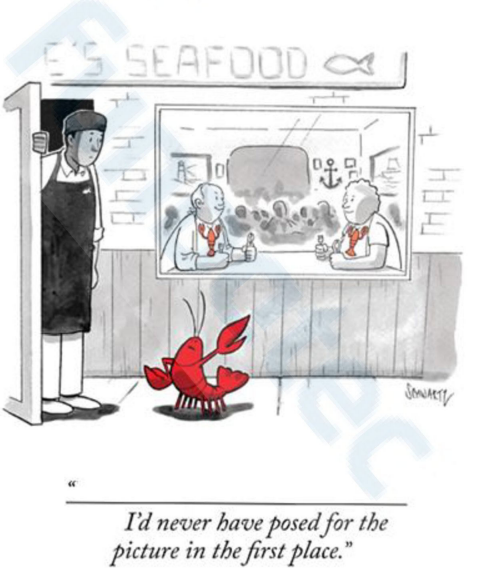
(Available at: https://www .instagram.com/p/DGweSUKkRkKwt/?img index=5)
If I knew you used it for this
If I had known you would be using it for this
If I have known you would use it for this
Had I knew you would use it for this
Had I known you use it for this
Read the sentences below and choose the option that correctly identifies the type of conditional used.
Sentence: “If he hadn’t ignored the weather warnings, he wouldn’t be stuck at the airport now.”Based on standard conditional forms, this sentence is:
a second conditional, because it expresses an unlikely present situation with a hypothetical result.
a third conditional, because it describes a past condition with a past hypothetical result.
a mixed conditional (present condition → past result), because a present unrealsituation produces a hypothetical result in the past.
a mixed conditional (past condition → present result), because a past unreal action affects a present unreal outcome.
Regarding conditional sentences in standard usage, analyze the statements.
I. Zero conditional typically uses present simple in both clauses to state general truths.
II. In first conditional, will belongs in the main clause when indicating a real possibility.
III. Second conditional uses past simple in the if-clause and would plus base form to discuss remote situations.
IV. Third conditional uses past perfect in the if-clause and would have plus past participle to imagine a past alternative.
V. Mixed conditionals are restricted to present conditions with future consequences in formal registers.
Which statements are CORRECT?
I – II – III – IV.
I – II – III.
II – III – V.
II – IV – V.
I – II – III – IV – V.
Analyze the sentence: 'Unless you study harder, you will fail the exam.' Analyze the assertions below:
I.'Unless' introduces a conditional subordinate clause meaning 'If... not'.
II.The main clause expresses a future consequence dependent on the condition.
III.The sentence can be paraphrased as 'If you don't study harder, you will fail the exam' with identical meaning.
Mark the option that presents only the correct statements.
II e III.
I.
I, II e III.
I e II.
Inspect the sentences thoroughly to appoint the fitting assertion.
a. Shut up or I’ll lose my temper.
b. Drop by one day and you’ll see how much our kids have grown.
c. Touch that again and you might get in trouble.
d. Take the medicine as prescribed and you are sure to see good results.
e. Stop cheating during tests or you might get detention soon.
f. Move to Miami and you’ll get a taste of what an endless vacation is.
There is occurence of passive imperative.
Special verb forms describe unreal events.
The sentences mean the same as if-clauses.
Emphatic imperative forms were employed.
Read.
I. ZERO CONDITIONAL: If you don’t study it, you fail.
II. FIRST CONDITIONAL: If you don’t study it, you’ll fail.
III. SECOND CONDITIONAL: If you didn’t study it, you would fail.
IV. THIRD CONDITIONAL: If you hadn’t studied, you would’ve failed.
Now mark the correct option.
None of the sentences are accordingly classified.
Only options I and III are accordingly classified.
Only options II and IV are accordingly classified.
All of the sentences are accordingly classified.
Only options II and III are accordingly classified.
In the fragment of the text “Whether it’s developing software applications to streamline energy management” (line 8), the word whether was used to introduce two possibilities and can be replaced by if without any changes in the meaning of the sentence.
Certo
Errado
Considering the phrase “If you don't help me, you can't imagine what I'll tell them.”, we have a clear example of what kind of conditional structure?
Mixed conditional.
Zero conditional.
Second conditional.
Third conditional.
First conditional.