







Seu próximo nível começa aqui
Com a Assinatura Ilimitada, você tem tudo que precisa para sua aprovação.
Com a Assinatura Ilimitada, você combina prática, teoria e método em uma única assinatura com tudo que você precisa para sua aprovação.
De acordo com seus conhecimentos sobre a Base Nacional Comum Curricular, no que refere-se ao ensino da Língua inglesa, complete a lacuna do texto a seguir e assinale a alternativa correta:
O ensino de inglês, de acordo com a BNCC, deve colaborar para desenvolver competências que vão além de ler, interpretar e resolver problemas. Nesse contexto, o eixo ______________ é bastante ampliado e envolve as práticas de linguagem com foco na compreensão e na produção oral, com ou sem contato face a face.
(Fonte: https://novaescola.org.br/bncc/conteudo/77/o-que-a-bncc-propoe-para-o-ensino-de-lingua-inglesa-adaptada)
Eixo da leitura.
Eixo da escrita.
Eixo dos conhecimentos linguísticos.
Eixo da oralidade.
Leia a tirinha.
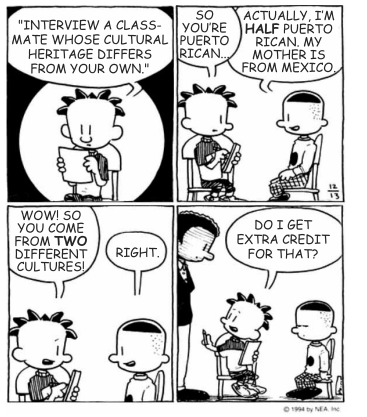
Uma proposta de atividade como a apresentada no primeiro quadrinho vai ao encontro da visão do ensino da língua inglesa proposto na BNCC, já que permite
valorizar diferentes repertórios linguísticos e culturais.
perceber diferentes aspectos a serem readequados em falantes não nativos.
reajustar futuras atividades para corrigir inadequações de falantes não nativos.
criar exercícios que aproximem o aprendiz do inglês falado.
perceber e compreender diferenças culturais e na produção da língua.
Leia a afirmativa a seguiir e assinale a alternativa que apresenta a qual estratégia ela se refere: “A estratégia de supor e adivinhar, levantar hipóteses e confirmá-las ou não. O contexto e o próprio texto fornecem informações para o esclarecimento do significado de uma palavra, observe as palavras anteriores e posteriores. Também é útil quando há a necessidade da percepção das ideias que não estão evidentes no texto, naquelas ocasiões em que há a necessidade de ler nas entrelinhas”. (SOUZA, 2005, P.46)
Inferência
Conhecimento extralinguístico
Scanning
Conhecimento de mundo
Conhecimento prévio
“Reading comprehension strategies are intentional plans and procedures that proficient readers apply to comprehend the text (MAINE, 2013). Readers should equip themselves with multiple reading strategies to comprehend a text effectively (SOHAIL, 2016). The complexity of the reading process is often associated with grasping the intended meaning of the text (YAPP et al., 2021). In addition, the process often involves “internal thinking” (PARIS & FLUKES, 2005). Reading strategies are thus employed by the readers who deliberately attempt to monitor and alter their initiatives in decoding the text, comprehending words, and understanding the meaning of the text (AFFLERBACH et al., 2008, apud PERTANIKA, 2022).
After reading the extract from Pertanika J. (2022) about reading, choose the CORRECT item that best summarizes the main ideas about reading strategies.
Reading is a productive skill in foreign language learning and for teaching it teachers use some reading strategies. The common reading strategies include skimming (searching for general overview), scanning (glance for finding specific facts), and intensive reading (a thorough read-through of the text). These strategies enable readers to identify the main point of the text from explicit and implicit information and synthesize the content effectively.
Reading is a receptive skill in foreign language learning and for teaching it teachers use some reading strategies. The common reading strategies include skimming (searching for general overview), scanning (glance for finding specific facts), and intensive reading (a thorough read-through of the text). Reading comprehension is largely facilitated by the interplay of cognitive and metacognitive strategies used by the readers. Metacognitive strategies consist of planning, assessment, and monitoring. On the other hand, cognitive strategies entail the strategies of progression, identification of the main point, integration of ideas, and making inferences.
Reading is a productive skill in foreign language learning and for teaching it teachers use some reading strategies. The common reading strategies include skimming (searching for general overview), scanning (glance for finding specific facts), and intensive reading (a thorough read-through of the text). So, readers who read critically can draw conclusions, find solutions, form justifications, compare concepts, hypothesize, and evaluate the same ideas and circumstances.
Reading is a productive skill in foreign language learning and for teaching it teachers use some reading strategies. The common reading strategies include skimming (searching for general overview), scanning (glance for finding specific facts), and intensive reading (a thorough read-through of the text). Although reading is an important skill for students, it is especially challenging for native English learners, given their distinctive linguistic, educational, sociocultural, and institutional backgrounds.
Reading is a productive skill in foreign language learning and for teaching it teachers use some reading strategies. The common reading strategies include skimming (searching for general overview), scanning (glance for finding specific facts), and intensive reading (a thorough read-through of the text). These strategies make reading comprehension easier without considering the students’ background.
Quais perguntas referem-se às estratégias de escrita ensinadas pelo professor utilizando o texto a seguir?
Last night, I was walking (walk) home when I saw (see) a car running very fast towards a red light. I looked (look) at the driver and I could see that he was talking (talk) on his phone. He didn't stop (not stop) at the traffic light, and another car crashed (crash) into him and killed (kill) him. When the police arrived they asked me what had happened (happen) and I told (tell) them that the driver hadn't seen (not see) the traffic light because he was on his phone.
I-Which of the following is the main event of this story?
II-Where were you walking to?
III-Which of the following events happened before the main event of the story?
IV-Which of the following events happened after the main event of the story?
V.-What did you say when the police arrive?
É correto o que se afirma em:
II e V, apenas.
I, III, IV, apenas.
II, III e IV, apenas.
I e V, apenas.
I, II, III, IV e V.
In TESOL (Teaching English to Speakers of Other Languages) classes, students develop their language skills through various activities: they enhance their listening abilities by engaging in group discussions, practice speaking by participating in oral presentations, refine their writing skills through essay assignments, and strengthen their reading comprehension by analyzing texts in different genres. In the light of that, match the second column according to the first:
First column: skill
1.Reading
2.Listening
3.Writing
4.Speaking
Second column: definition
(__)is the skill of actively perceiving and comprehending spoken language, allowing individuals to understand and interpret oral communication effectively.
(__)is the aptitude to convey thoughts, information, and creativity through the creation of text, using written language to communicate ideas, stories, or messages.
(__)involves the ability to express one's thoughts, ideas, and emotions through coherent and articulate oral communication, contributing to effective dialogue and interpersonal interactions.
(__)is the capacity to decode, interpret, and comprehend written text, enabling individuals to access and extract meaning from written materials, ranging from books and articles to digital content.
Select the option that presents the correct association between the columns:
2 − 3 − 4 − 1.
1 − 4 − 2 − 3.
4 − 3 − 1 − 2.
3 − 2 − 4 − 1.
2 − 1 − 3 − 4.
Syntactic ambiguity, arising from grammatical structures that allow for multiple interpretations, is an intriguing linguistic phenomenon. Recognizing and mitigating syntactic ambiguity requires a profound understanding of the structural nuances of language, highlighting the underlying complexity in the formation of sentences in contemporary English.
Certo
Errado
Central to effective text interpretation is the discernment of the author's purpose and perspective. Scrutinizing linguistic choices, tonal variations, and structural elements provides valuable insights into the author's intentions, allowing readers to engage meaningfully with the material and appreciate the text's overarching significance.
Certo
Errado
A perspectiva interdisciplinar no currículo determina que cada área de conhecimento, cada assunto e cada componente curricular deve ser abordado separadamente por parte dos educadores em sala de aula, sem menção a outras áreas do saber ou a outras disciplinas curriculares.
Certo
Errado
Teaching methods have been considered as a set of core teaching and learning principles together with a body of classroom practices that are derived from them. There are, and have been, many methods in English teaching. Methods deal with practical details and fundamentals of teaching. In Applied Linguistics, studies associated with English language teaching have suggested the following methods, along with a few others, as the most known, debated and analyzed in English teaching literature (written works). They are: I) Audiolingual Method or Audiolingualism; II) Total Physical Response; III) Silent Way; IV) Grammar-Translation Method; and, V) Direct Method or Natural Method. With that in mind, check the alternative that presents the correct information about one of the before-mentioned methods.
Audiolingualism or Audiolingual Method is based on a behaviorist theory. Through this method, students are encouraged to become autonomous learners by concentrating on tasks to be accomplished. Audiolingualism is against resource heavy teaching as lessons and activities should be directed by learners. Moreover, learning is assumed to be a problem-solving, creative and discovering activity.
Total Physical Response is a set of learning recommendations, whose main characteristics are: decoration, furniture and the arrangement of the classroom. This method focuses on the use of music and the authoritative behavior of the teacher.
Silent Way is a method associated with the humanistic technique. According to this method, the teacher is the coach and the students are the clients. In lay terms, through Silent Way, one person gives advice, assistance and support to whoever has a problem or is some way in need.
Grammar-Translation Method assumes reading as a more important skill than communicating. According to this method, classes are carried out completely in the learners’ mother tongue as grammar and vocabulary are translated into the target language. In the GrammarTranslation Method, the main goal for instruction is the ability to attain a high proficiency in translation and grammar accuracy.
Direct Method or Natural Method focuses on teaching a language by involving students in physical activities. The first goal of a teacher should be helping students to develop listening fluency. According to this method, language is a purposeful activity toward a goal, whose teaching should begin with the spoken language.



